Editorial Approach
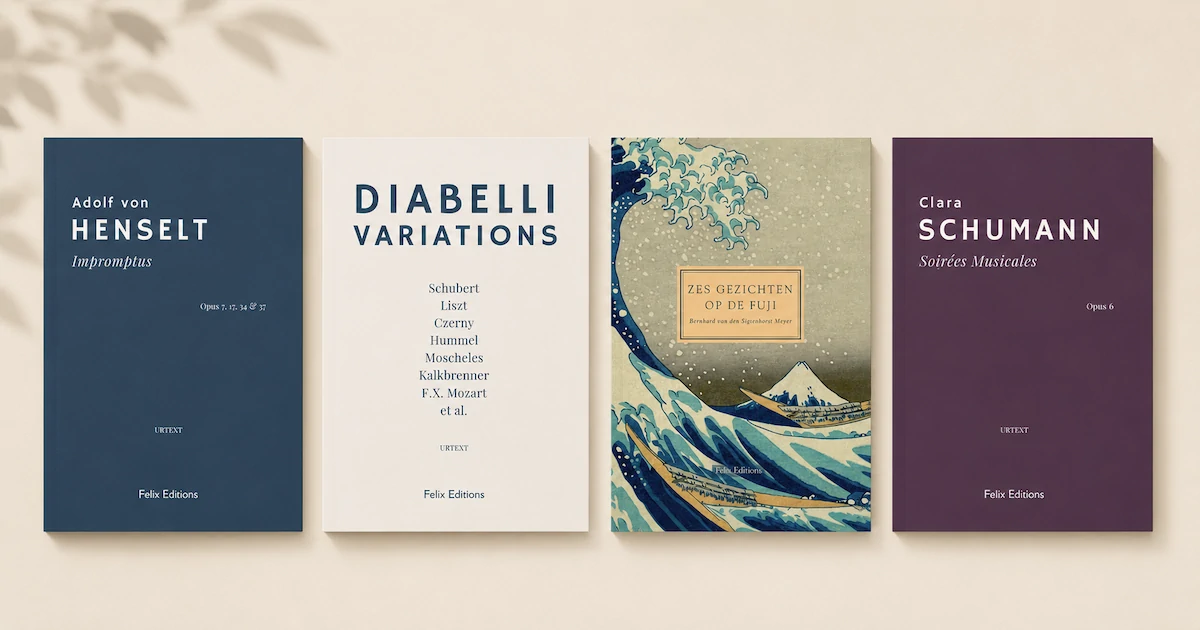
Felix Editions publishes newly engraved practical editions of overlooked nineteenth-century piano music. Our work begins with historical sources, but it is guided throughout by a simple editorial purpose: to produce scores that can be studied, read and played with confidence.
Many works in this repertoire survive only in old prints, sometimes in a single source. Some are clear and reliable; others contain inconsistencies, misprints or awkward engraving. Our editions do not pretend to remove every uncertainty. They aim instead to make the available evidence usable: carefully transcribed, newly engraved, clearly presented and accompanied by concise editorial information.
From source to working edition
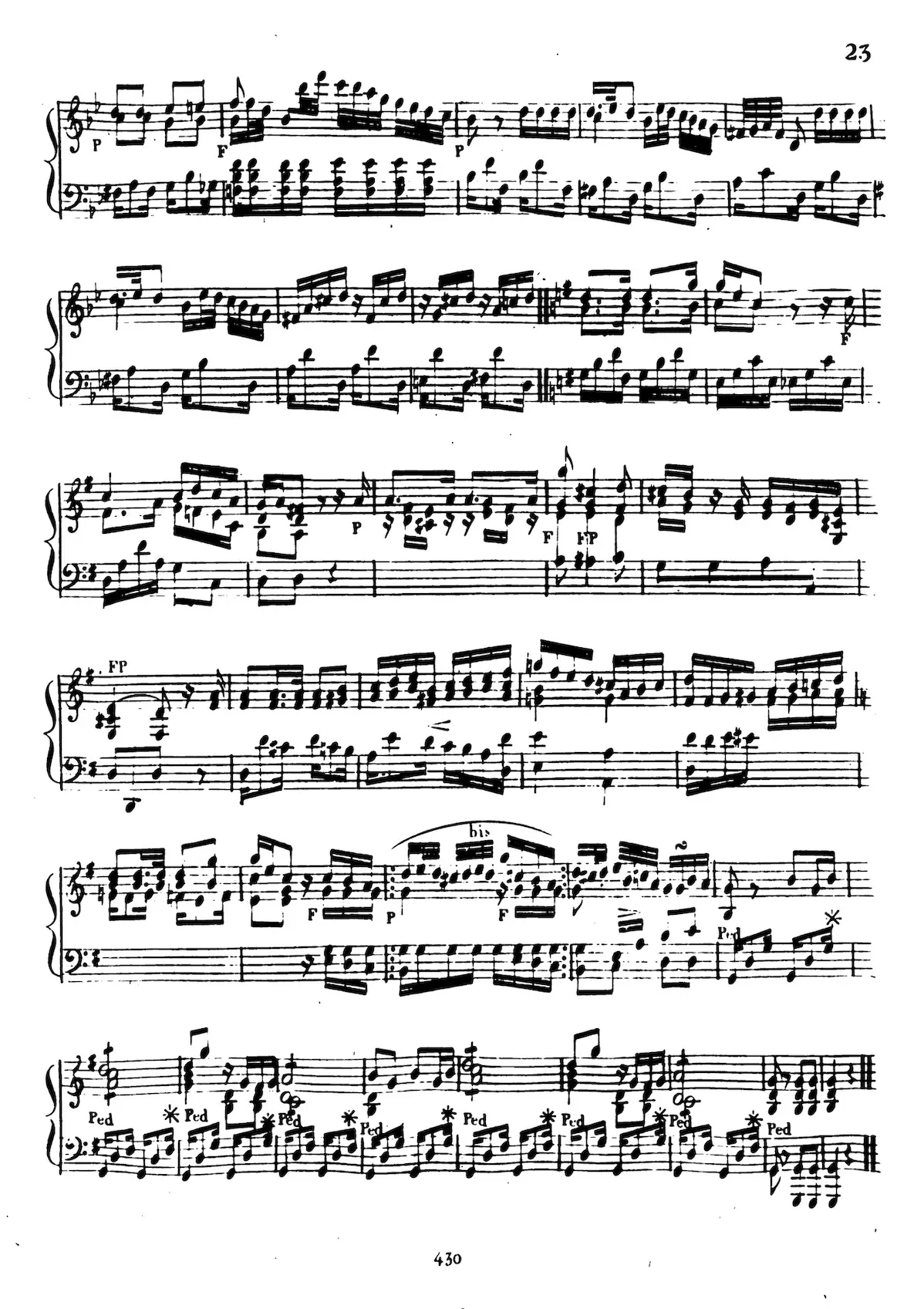
A scan gives access to a historical document. A reprint reproduces that document, often with its original layout, blemishes and errors intact. A new edition requires a different kind of work.
For Felix Editions, preparing a score means reading the source closely, checking the notation for internal consistency, identifying likely mistakes, and making the music available in a form that serves both study and performance. Where more than one historical source is available, sources are compared. Where only one source survives or is practically accessible, that source is used with care and its limitations are made clear. Where a source is damaged, ambiguous or demonstrably unreliable, the edition may require cautious reconstruction from the best available evidence.
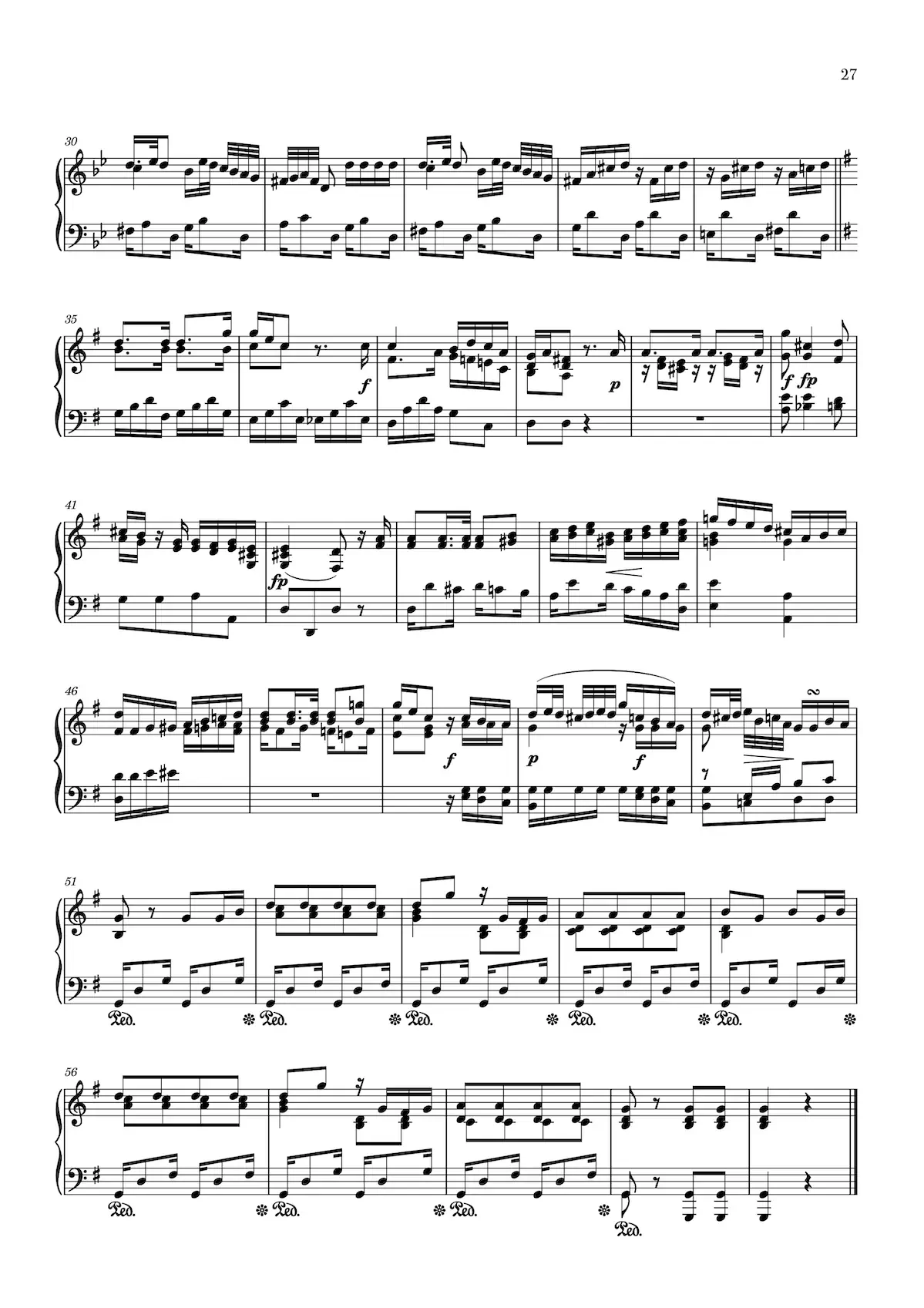
The result is not merely a cleaned-up image of an old print. It is a new engraving, made from the sources and prepared for modern use.
What we mean by a critical edition
A critical edition is an edition based on a considered reading of the sources. It does not simply reproduce what appears on the page. It asks whether the notation is coherent, whether repeated passages agree, whether accidentals, slurs, dynamics or articulations appear to contain errors, and whether the source itself gives reason for doubt.
In many nineteenth-century piano works, the surviving sources are not abundant enough to support a full scholarly apparatus in the strictest sense. For that reason, Felix Editions uses editorial terms carefully. Some editions may be described as critical editions; others are better understood as critical performing editions: editions that combine source-based work with practical editorial judgement, especially where the surviving material is limited.
In all cases, the aim is transparency. Editorial decisions are not made in order to modernise the music or impose a personal interpretation. They are made to clarify the score where the source is faulty, inconsistent or unclear.
A note on Urtext
Felix Editions does not use the word Urtext as a general label for everything it publishes.
The term is meaningful only when the source situation allows it: for example, when there are sufficient primary sources to compare, and when the editorial method can plausibly aim at establishing a text close to the composer’s intended notation. Much of the neglected nineteenth-century piano repertoire does not survive under such favourable conditions. Often there is one early print, sometimes with obvious problems, and no autograph or corrected copy available for comparison.
In such cases, it is more honest to speak of a critical edition or a critical performing edition. That distinction matters. It tells the player not only what the edition offers, but also what kind of evidence stands behind it.
Sources and limitations
Each edition is prepared from the best available source material. In practice, that may mean:
- a first or early printed edition;
- a later authorised or revised print;
- more than one historical edition, where comparison is possible;
- a single surviving source, treated with explicit caution.
When the source contains likely misprints or inconsistencies, these are assessed in context. Repeated passages, harmonic logic, voice-leading, pianistic feasibility and parallel notation may all help determine whether a reading is likely to be intentional or erroneous. Not every irregularity is corrected. Nineteenth-century notation is often flexible, and unusual details may be musically meaningful.
Where an editorial decision affects the musical text, it is made as sparingly as possible and, where appropriate, explained in the commentary.
Engraving for real use
Historical care is only part of the work. A score must also function at the piano.
Felix Editions are newly engraved with attention to spacing, readability and page layout. Dense textures, extended stretches, double notes, inner voices and complex passagework require more than mechanical transcription. They require notation that can be read under the hands.
Page turns are considered where the music allows. Systems are spaced to avoid unnecessary crowding. The aim is not to make difficult music look easy, but to make the difficulty legible. This is especially important in repertoire that has lived for too long in scans or inaccessible old prints. A well-prepared modern edition can help restore a work to practical musical life: not by simplifying it, but by allowing the player to see it clearly.
Editorial intervention
Editorial intervention is limited, cautious and documented according to the needs of the edition.
Typical issues may include obvious wrong notes, missing or contradictory accidentals, inconsistent slurs, unclear dynamics, misplaced expression marks, or notational discrepancies between parallel passages. In some editions, fingering may be added where it is useful, especially in technically characteristic writing. Such additions are not presented as part of the original source unless there is evidence for them.
The guiding principle is restraint. The score should remain as close as possible to the historical source, while also removing obstacles that are likely to result from error rather than intention.
Commentary and documentation
Felix Editions are intended for players, teachers, collectors and researchers who want to know what they are using. The accompanying notes therefore avoid unnecessary technical bulk, but they do not hide the editorial basis of the edition.
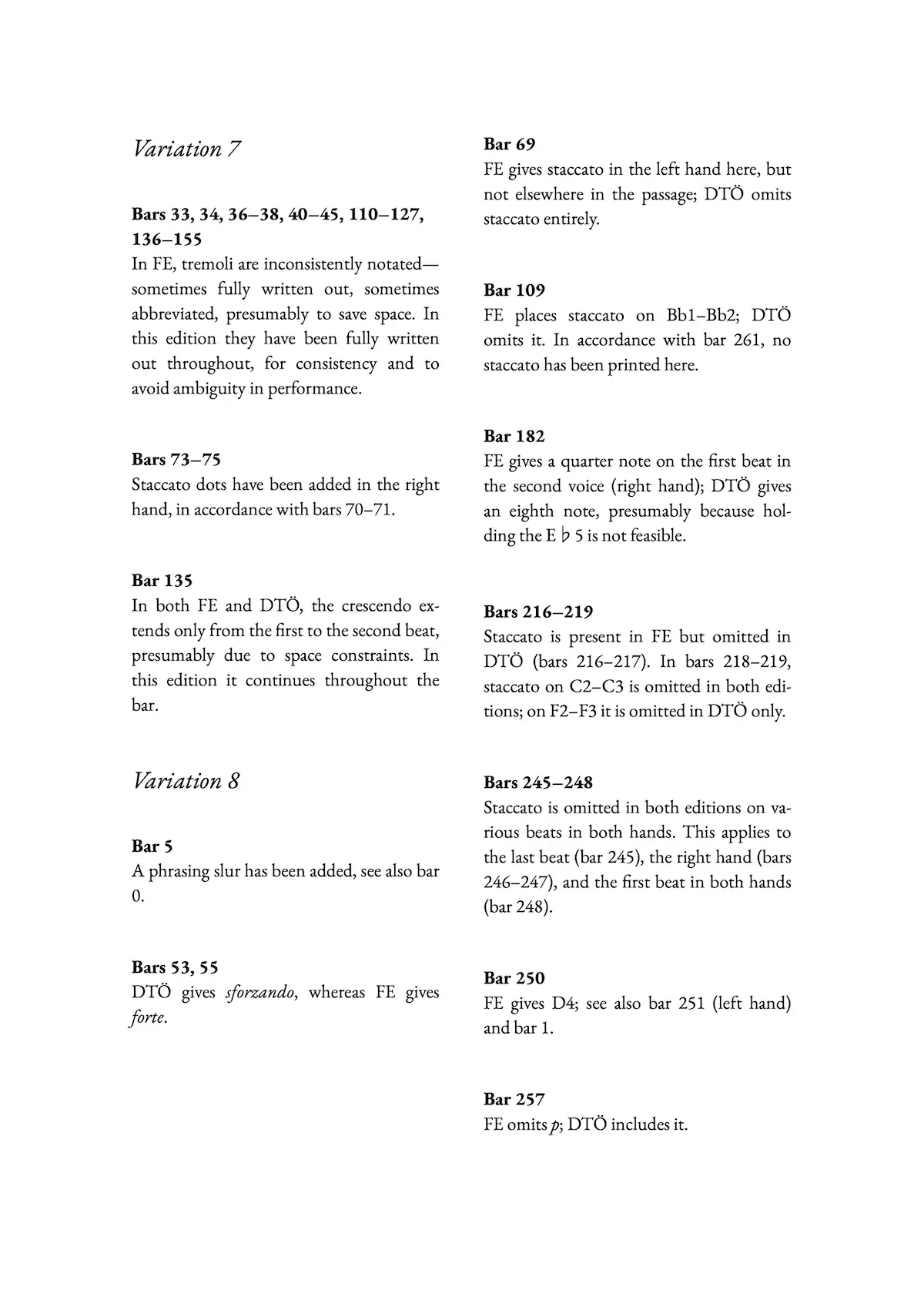
Where relevant, the commentary explains the source used, important limitations, significant editorial decisions, and points of musical or historical interest. The purpose is not to turn every edition into a dissertation. It is to give the user enough information to understand the nature of the text and to make informed musical decisions.
Historical care, practical purpose
The Romantic piano repertoire is larger than the canon suggests. Many works by once-admired composers have disappeared not because they lack musical value, but because they are hard to find, hard to read, or available only in unsuitable forms.
Felix Editions exists to address that practical problem with editorial care. A score can be historically aware without being unusable; it can be playable without being careless. The best edition, for this repertoire, is one that respects the source and serves the musician.